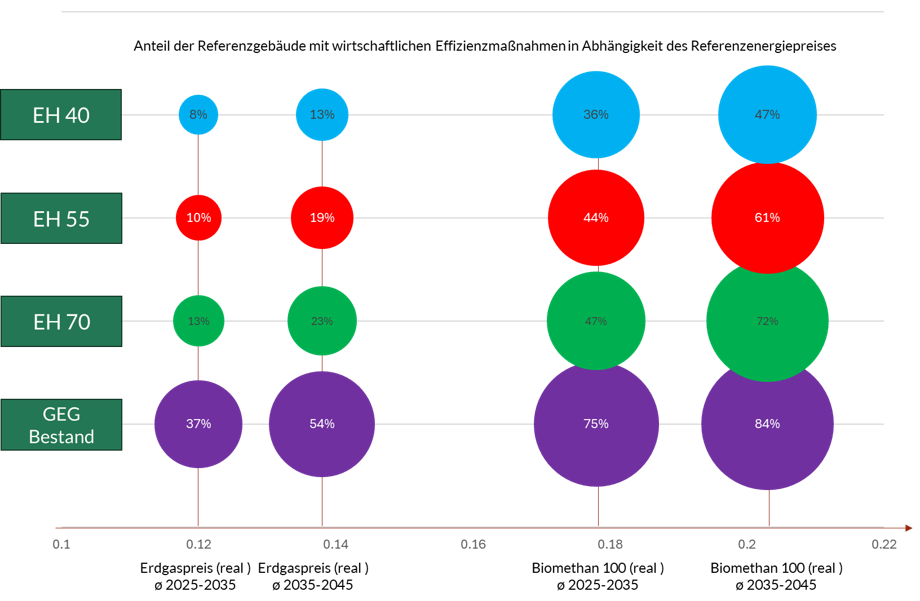
What is the most effective way to decarbonize the existing building stock? What levels of renovation make sense from the perspective of building owners and for the energy system?
At IREES, we explored these questions in a recent study commissioned by the Climate Protection Science Platform. The study focused on the cost-optimal interplay between the extent of renovation, climate-friendly heating technologies, and the resulting emissions reductions in the existing building stock, as well as the impacts on the electricity system.
We had the opportunity to present the results during a webinar on May 20, which drew a large audience of interested participants and sparked engaging discussions. Thank you very much for the great interest and for the organization by the Climate Protection Science Platform!
Our analyses at the level of individual buildings, the entire building stock, and the energy system show: Four key levers are particularly crucial for a successful and cost-effective transformation:
🔹 Worst first: Align subsidy programs more closely with the initial energy performance of buildings.
🔹 Quick wins: Utilize low-threshold, low-investment measures to achieve economically attractive savings and establish a low-temperature standard.
🔹 Think systemically: Integrate building subsidies more closely with the requirements of the entire energy system.
🔹 Avoid oversizing: Reform standards and liability frameworks so that heat pumps can be designed more cost-effectively.
The results make it clear: A successful building transition requires not only ambitious goals, but also a nuanced funding policy and a systemic approach to the transformation.
The full study is available here: Energetische Ertüchtigung der Gebäudehülle, Wechsel zu klimaneutraler Wärmeversorgung und Auswirkungen auf das Energiesystem
IREES – RESEARCH FOR FUTURE 🌍🍃